

Uncategorized


Emily rocking her Girls with Guts t-shirt!
I was seventeen when I was diagnosed with Crohn’s Disease, and the news left me shocked, discouraged, and overwhelmed. I didn’t know what this meant for my life going forward. Suddenly I had to readjust to a new reality — my new “normal.”
To secure the accommodations I needed for my new reality, I set up a 504 plan with my high school. A 504 plan is a legal document that provides accommodations to ensure students with disabilities have equal access to education. My 504 plan included sitting near the classroom door so I could easily leave to take bathroom breaks, always having water on me, always having a snack on me, and being able to go to the bathroom whenever I wanted. The accommodations were great, but I felt embarrassed.
I would get asked by my classmates why I was allowed to have water and snacks on me when it was not allowed for the general student body. I would mention that I had been diagnosed with a chronic illness, but I felt so self‑conscious talking about it. Crohn’s Disease was something that I didn’t want to talk about with other kids my age. Luckily, as time went by and I got older, I got more comfortable talking about it.
Fast forward to November 2022 when the worst flare of my life started. In 2023, I tried three different biologics. The second started with an initial infusion dose. While we were there, my mom, who’d accompanied me, picked up and started reading a magazine. The article she read discussed an organization called Girls with Guts. When she showed me the article, I searched for and found the GWG website and Facebook forum.
Connecting with other women who had Crohn’s Disease or Ulcerative Colitis was a game changer for me. I started to make friends and connections. Eventually, I decided to volunteer for the organization by, among other things, writing blog posts about Inflammatory Bowel Disease. Unlike high school Emily, 2023 Emily found expressing her thoughts through writing therapeutic.
I’ve written blog posts about what I want my friends to understand about my illness, how to navigate college, how social media presents chronic illness, and much more. I noticed that as I started speaking more openly about Crohn’s Disease, my mental health improved. I felt less embarrassment and benefitted from the empowerment and support. It helped me feel more understood by the people in my life.
Writing the blog posts and connecting with others started to heal me. Before, on the anniversary of my diagnosis day, I felt low, but since I started speaking more openly about Crohn’s Disease, the sadness has subsided on that day. I became more candid with people in my life about my symptoms. I responded to other women’s posts on the Facebook forum and offered support. I became a “Love Your Guts Mail Gal” so that I could write letters of encouragement to women who were suffering with IBD.
Getting diagnosed with a chronic illness isn’t something to be ashamed of. It isn’t something you can control. Your power lies in how you talk about it and what you choose to do with what you’ve learned.
If you’re reading this and have a chronic illness, I encourage you to speak openly about it with confidence and pride. Be open with others and give your feelings the space they deserve. Sharing my story helped me find Girls with Guts, and that sense of community has been one of the most healing parts of all. Speaking openly about my experience with Crohn’s Disease — and everything that comes with it — helped heal me, and it could help heal you too.
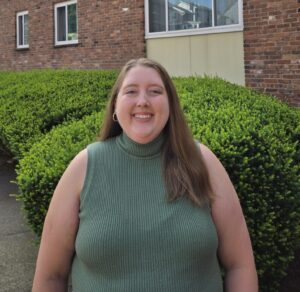 Born and raised in Pennsylvania, Emily was diagnosed with severe Crohn’s Disease with complications in 2016 at age 17. Being 26 now, she wants to help bring awareness to IBD. Emily just graduated with her master’s degree in education. She currently works as a substitute teacher but her dream is to be a first grade teacher. Outside of working, she enjoys traveling, spending time with loved ones, and reading.
